
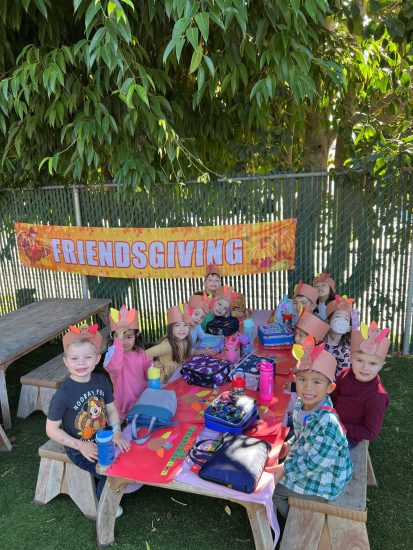
November is a great time to reflect on gratitude and the ways we can help children develop appreciation for the people and world around them. For young children, thankfulness is a skill that grows over time through experiences and examples set by the grown ups in their lives. In the classroom, we nurture gratitude by encouraging children to care for their materials, help a friend, notice acts of kindness, and contribute to our school family. Instead of expecting children to just say “thank you,” we focus on helping them understand the feelings and connections behind those words.
Families can nurture gratitude at home through everyday moments. Invite your child to notice something they enjoyed about their day, acknowledge when someone has been helpful, or participate in small acts of kindness, like helping set the table or making a card for a loved one. Modeling appreciation in your own interactions is a great way to teach it. When children hear us express thanks and see us treating others with care, they begin to understand what gratitude looks and feels like. We aren’t hoping to create a checklist of polite behaviors, we’re hoping to help children develop an appreciation for others that grows naturally through connection and empathy.